

🕛 Estimated Read Time: 4 minutes and 10 seconds.
You’ve made it to week 2 of the Step Challenge, well done!
My goal is to make sure that this is MORE than just a step challenge. I want to give you some valuable lessons and insights along the way so that you can build long-term healthy habits.
I know many people can be very all-or-nothing when it comes to challenges like this, so…
It can be helpful to think about your healthy habits as a dial that you can adjust.
Kind of like the volume dial on a sound system or the temperature setting on your stove:
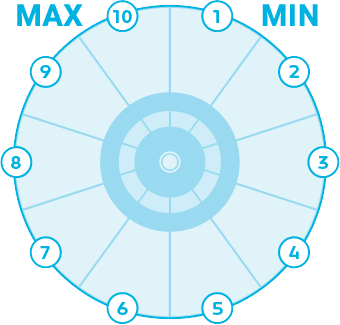
Where 1 is the smallest, easiest, and minimal-effort version that your habit (walking more) could be and 10 is the biggest, most difficult, and maximum-effort version that your habit could be.
Then 2-9 is a range of possibilities on a continuum in between the min and max versions.
Thinking like this opens up the opportunity to make small incremental changes to your habits that are thoughtful and sustainable rather than huge changes that are drastic and unsustainable.
- 🟢When life is going well and you’re nailing your consistency, you can adjust the dial on your habit ⬆️up a notch or two.
- 🔴When life is not going so well or you’re struggling to stay consistent, you can adjust the dial on your habit ⬇️down a notch or two.
While we’re focusing on scaling your habits up and making them more difficult or complex, take note that the same principles apply for scaling your habits down and making them easier or simpler too.
Here are some examples of what adjusting the dial might look like, courtesy of Precision Nutrition:
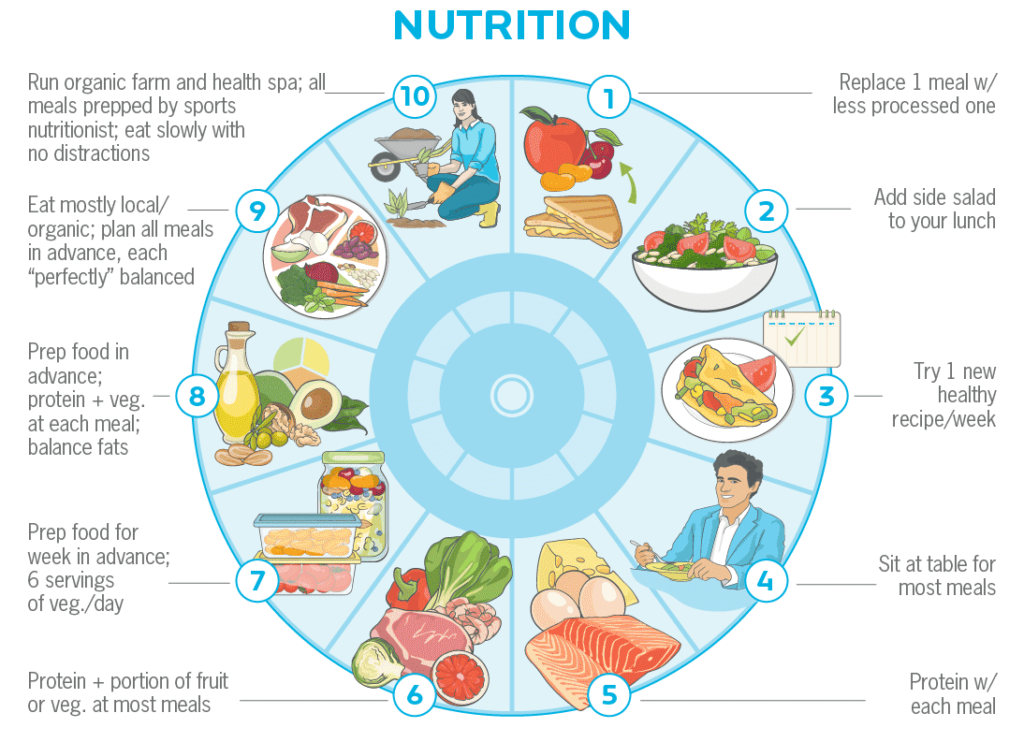
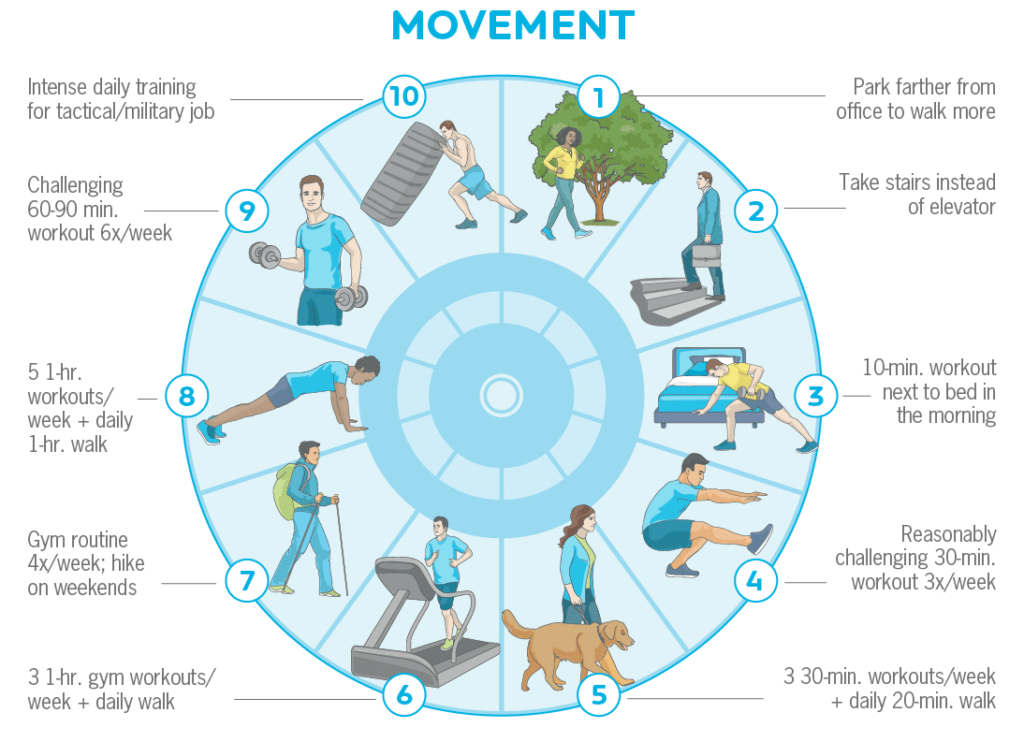
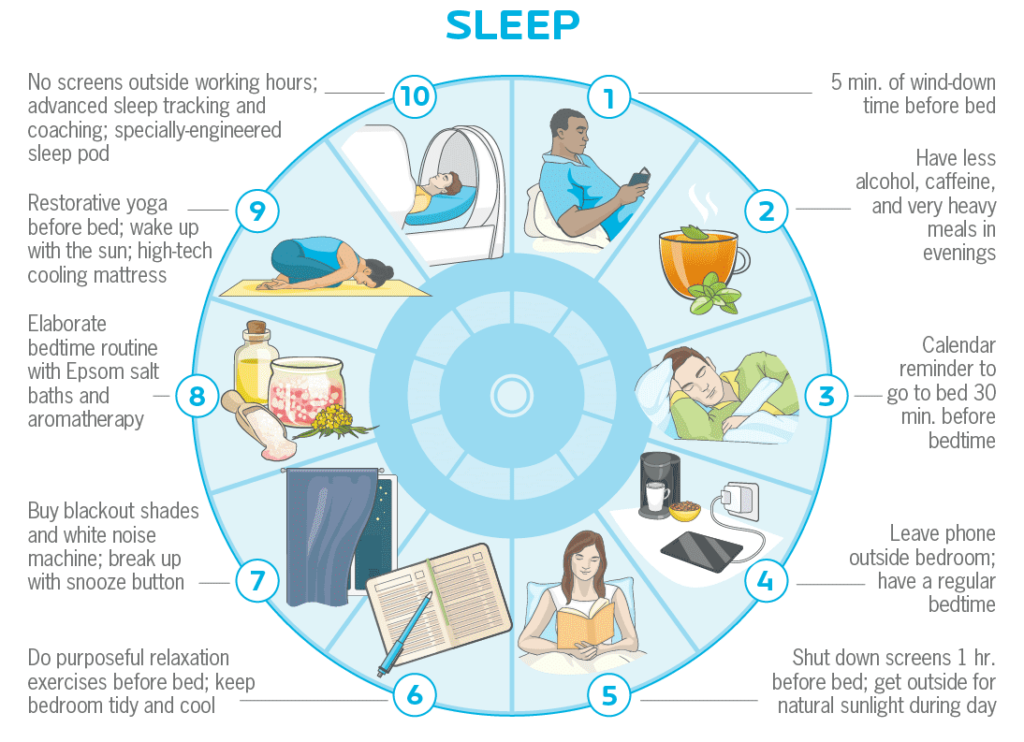
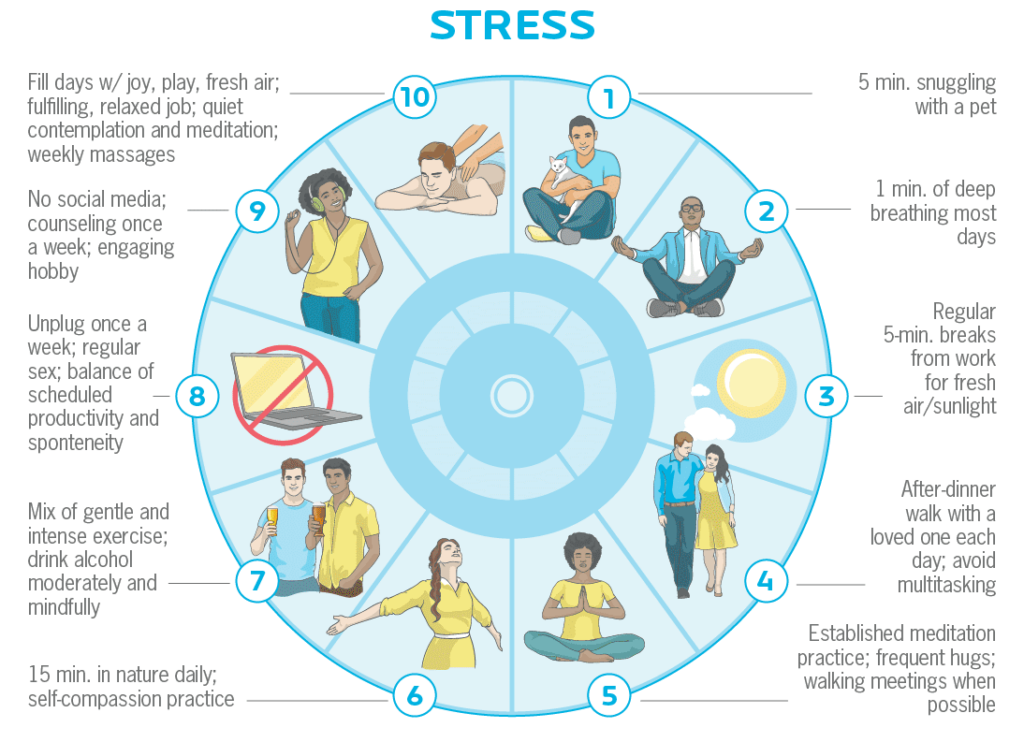
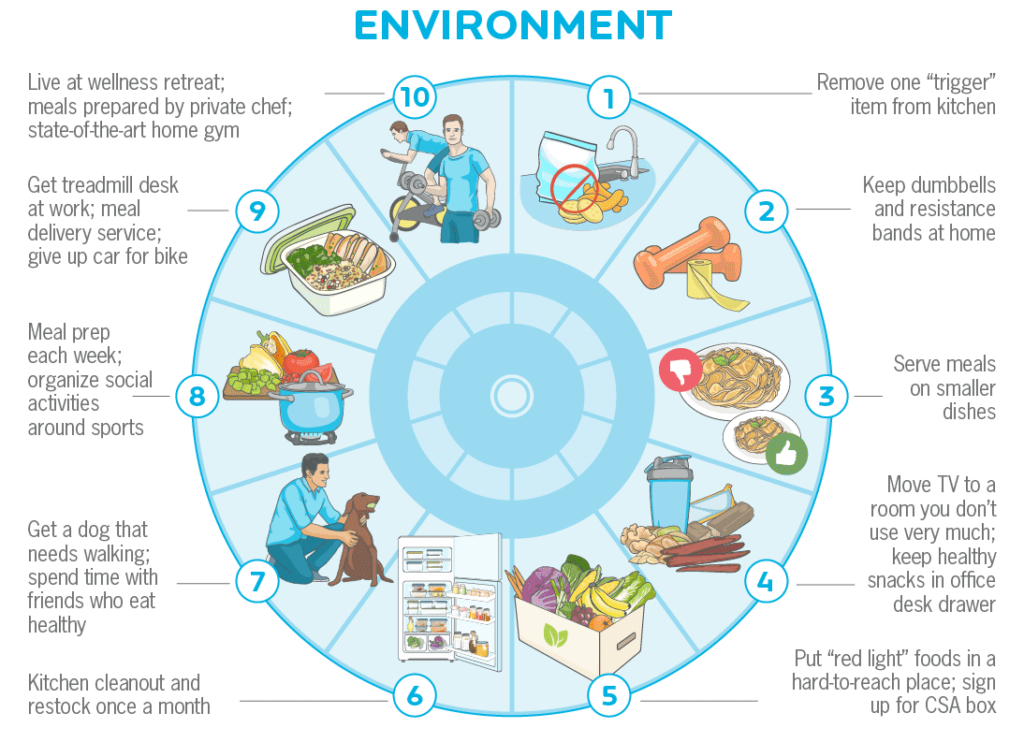
How to Adjust the Dial to Scale Up Your Habit:
- First, consider your current habit (walk more steps) and think about where it might be on the “dial” right now.
- Next, consider what a “1” and what a “10” might look like, just for perspective and comparison.
- Finally, identify what your current habit might look like if you adjusted the dial up by just 1 or 2 notches.
Remember, you’re looking to make small incremental improvements.
When done consistently, they’ll add up over time to massive results.
- If you’re currently walking 6,000 steps a day, see if you can dial it up to 7,000 steps a day.
- If you’re currently drinking 1.5 litres of water, see if you can dial it up to 1.75 litres of water.
- If you’re currently doing a 5-minute bedtime routine, see if you can dial it up to a 10-minute bedtime routine.
- If you’re currently reading for 10 minutes in the morning, see if you can dial it up to 15 minutes.
If you find that you’re still managing to be consistent with the new level of difficulty and complexity, then take some time to let that new you could dial it up even further (if you want to).
Or not. You’ll get to a point where scaling up your habits will start to give you diminishing returns and you’re better off working on building or scaling other habits instead.
You might find that walking 6,000 steps a day is too easy for you, walking 8,000 steps a day is perfect, and walking 10,000 steps a day is a stretch that is only possible when life is quiet and you have a lot of free time, and then walking 12,000 steps a day is simply impossible.
More isn’t always better, but more consistency is.
Some bonus points around adjusting the dial to scale your habits up or down:
- The habit that you’re aiming to be consistent with should be set at your bare minimum. Just because you have a goal of walking, for example, 6,000 steps a day doesn’t mean you can’t still overshoot that to 12,000 steps on really good days. It just means that the 6,000 steps is what you’re aiming for even on the worst days. So don’t see small incremental changes as a limit on your potential, all it’s doing is raising your baseline slightly.
- If you find your dialed-up habit is starting to feel too difficult or you’re not being consistent enough, consider dialling it back down until it feels comfortable again. It’s OK to do that, you can always dial it up again later. You’re better off doing a bit less but more consistently than trying to do too much and not succeeding.
- Almost EVERYTHING in health and fitness is on a continuum from better to worse for your goals. Carbs don’t have to be “good” or “bad”. You don’t have to do the “perfect workout” or skip it completely. You don’t have to wake up at 5am and do a super complicated morning routine. You could adjust the dial to make slightly better carb choices based on what’s available, you could scale your workouts up or down to match your energy and time availability, and you could wake up just a little bit earlier in the mornings to do just 1 thing before jumping into the work day.
One Last Thing: Stop Pressing Pause!
The reason we love thinking about how to adjust the dial is it gets you away from the all-or-nothing “pause button” mentality.
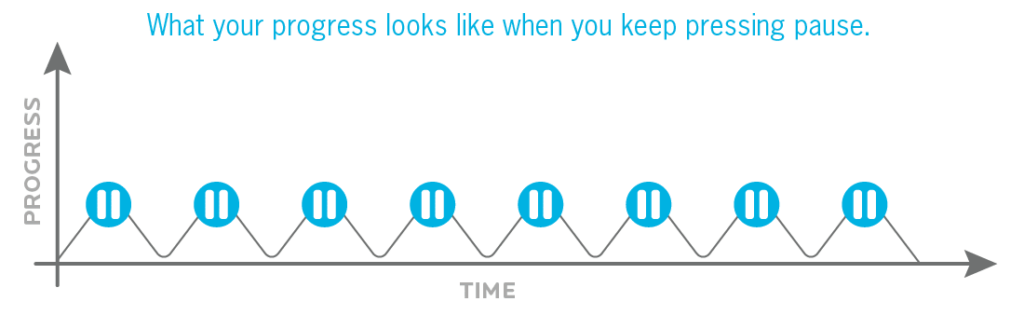
Maybe this sounds familiar: “I’ll resume healthy eating after my vacation… once the baby is born… after Dad gets out of the hospital… when work quietens down… Monday… January 1.”
While wanting to be able to give your best and do things well is commendable and full of good intentions, it’s one of the fastest, surest, most reliable ways to sabotage your progress.
You NEED to learn how to keep your momentum going and stop starting, stopping, and restarting over and over again.
There’s no pause button in life. Just because you’re going away on vacation, completely swamped at work, pregnant, or injured doesn’t mean you should stop trying to do your reasonable best.
Your best might just need to look a little different for a while.
No matter what, if you want to keep making real progress, then you need to keep on with your healthy habits, even if it’s in the smallest possible form.
When life gets tough, scale those habits right down to whatever feels do-able.
Get away from being so “all-or-nothing” and be more “always something”.
Consistency is key.
Don’t forget to post your Step Challenge journey in the Sleekgeek Health Revolution Facebook group using the hashtag #StepChallenge AND tick off your steps goal in Challenge Tracker.
You must be logged in to post a comment.